
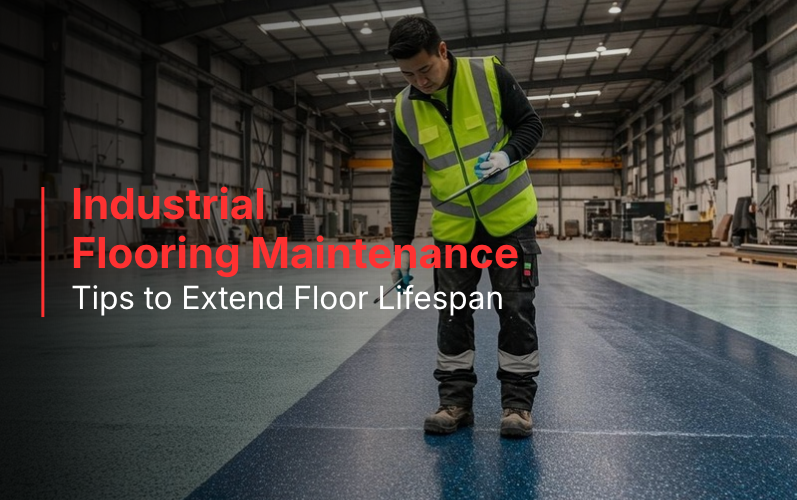
Industrial Flooring Maintenance: How to Extend the Life of Your Floors
Quick Answer: Industrial flooring lasts longer with proactive maintenance. Removing grit, controlling spills, inspecting damage early, and maintaining hygiene are vital to prevent premature degradation of flooring quality. Whether you are a facility manager, maintenance team, general contractor, or other professional, following a planned maintenance routine helps protect floor durability, reduce costs, and maintain a safe working environment
Flooring is one of the trickiest areas to handle in industrial facilities. Trucks roll over it, machines sit on it, workers walk on it all day, and oil, chemicals, and cleaning activities pose a risk of wear and tear every day. Even a strong, well-installed floor can deteriorate prematurely without proper maintenance.
However, building a strategic plan for floor care can increase the floor’s life and save you from big repair bills. In this blog, we will share some of the most effective industrial flooring maintenance tips as recommended by the experts at Acrylicon Ireland.
Key Takeaways
1. Clean Regularly: Follow a consistent cleaning schedule to remove dust, grit, oil, and other contaminants before they damage the floor.
2. Use Suitable Cleaning Products: Choose cleaners and equipment that match your flooring type and follow the manufacturer’s recommendations.
3. Manage Spills Quickly: Clean chemical, oil, and grease spills promptly to prevent stains, surface damage, and safety risks.
4. Inspect and Protect Floors: Check for cracks, chips, coating damage, and worn markings. Protect high-traffic areas to reduce wear and tear.
5. Create a Maintenance Plan: Set cleaning and inspection schedules, train your staff, and consult flooring experts to maintain long-term floor performance.
Read our blog on expanding the lifespan of resin flooring.
Why Is Industrial Floor Maintenance Important?
Replacing an industrial floor is expensive. It also means downtime, as when flooring maintenance is underway, you need to stop production. This will add to the expenses. On the other hand, Routine maintenance generally costs less than major floor repairs or complete replacement. Besides saving costs, the payoff of investing in regular care of your commercial facility flooring goes beyond that. It improves operational efficiency. It also enhances workplace hygiene, as slippery patches and worn markings are a common cause of workplace accidents.
What Should be the Core Flooring Maintenance Routine?
Clean Often with a Proper Cleaning Schedule
Maintain a cleaning schedule. This is the least you can do to care for your industrial facility flooring. Flooring is occupied often; we all know it. However, a busy working environment should not be a reason to neglect regular cleaning. Use a strategic plan to clean the floor at least twice a day; adjust it between shifts or at the end of shifts.
Clean the Right Way
Dust and grit act like fine sandpaper under foot traffic and wheels. Sweeping or vacuuming daily removes them before they scratch the surface. Using the right method and products for cleaning plays a great role. In large areas, a ride-on scrubber saves time. In small rooms, hand cleaning lets you reach corners and edges.
What you clean with matters as much as how often. Choose a gentle, neutral cleaner, or the one your floor maker recommends. Strong acids, harsh alkaline products, and rough pads can dull the surface and reduce grip. After cleaning, rinse well. Leftover soap film makes floors slippery and attracts more dirt.
Know Your Floor Type
Not every floor reacts the same way to the same product. You have to match it to the manufacturer’s guidance. This is a must. Besides that, here are some flooring care tips for materials mostly used in industrial floor surfaces:
| Flooring Type | Best Routine Cleaning | Oil / Grease / Stains | Avoid | Extra Tip |
|---|---|---|---|---|
| Epoxy / Resin Floors | Dust-mop or vacuum, then mop with warm water and a pH-neutral cleaner. | Use a mild, water-based degreaser on oily patches; rinse thoroughly afterward. | Rough scouring pads, steel wool, abrasive powders, strong acids, concentrated alkaline strippers, citrus or solvent degreasers. Use approved products and equipment as per the manufacturer’s guidance. | Use soft microfiber, nylon, or white/red non-abrasive pads; never black or maroon pads. |
| Polyurethane Floors | Sweep or dust-mop, then clean with a water-based, pH-neutral cleaner. | Blot spills promptly; use a mild water-based cleaner or diluted dish soap, then rinse. | Strong solvents, acetone, paint thinner, high-pH or ammonia-heavy cleaners, abrasive pads. | Keep the finish intact. Once it dulls or scratches, repair or recoat rather than scrubbing harder. |
| Polyaspartic Floors | Sweep regularly; mop with warm water and a pH-neutral cleaner. | Clean spills immediately; a few drops of mild dish soap in warm water usually works for fresh oil or residue. | Leaving spills to sit, citrus cleaners, corrosive degreasers, floor strippers, wire brushes, abrasive pads, and pressure washing. Follow the manufacturer’s approved cleaning methods. | Polyaspartic is tough but not stain-proof; quick blotting and rinsing prevents stubborn marks. |
Deal With Spills Straight Away
A spill is not something you leave. It can easily turn into a stain and leave a permanent mark on your flooring. Yes, industrial flooring is built to resist such spills from oils, solvents, and chemicals. However, keeping them exposed to spills is actually too risky. So dealing with spills properly and managing them in a timely manner is crucial. Keep absorbent material and spill kits close to risky areas. Train your team in spill management with a strategic procedure. A quick response in the first few minutes prevents most spill damage.
Protect the Vulnerable Spots
Some areas in your facility wear out faster than others. They include the entrances, loading bays, walkways, and paths used by forklifts. Take preventive measures in those spots; keep a separate strategy to tackle the vulnerabilities there. For example, pay extra attention to areas exposed to heavy use or physical stress. Place protective mats and durable coatings to help prevent scratches, gouges, and other damage.
- Put mats at doors to catch grit from shoes and wheels.
- Use pads, trolleys, or wheels when moving heavy items. Never drag them.
- Check forklift wheels often. A chipped or worn wheel can cut into the floor.
- Mark traffic routes clearly so loads follow the same strong paths.
Inspect Regularly and Repair Early
Regularly inspect your floor, looking for small issues such as cracks, chipping, patchy wear, loss of coating, and dulled safety lines. Catching these early signs of damage is easy and can often be fixed. If small chipping/ cracking occurs on a resin floor, repairs may be possible without having to fully recoat. It becomes a huge issue if it is not repaired early, meaning water and chemicals can get through and more extensive repairs are needed.
Deep Clean and Renew the Coating
Daily cleaning is not enough forever. Plan seasonal cleaning in a timely manner. In areas of high usage, exposure to chemicals, or extremes of temperature, re-application of a protective coating will ensure continued protection to the underlying surface.
How to Create an Effective Industrial Floor Maintenance Plan
| Step | What to Do | Why It Matters |
|---|---|---|
| 1. Assess Your Facility | Identify the type of traffic, chemical exposure, temperature, and humidity levels in your facility. | Helps you understand the conditions your flooring needs to withstand. |
| 2. Create a Maintenance Schedule | Set timelines for routine cleaning, floor inspections, and protective coating checks. Adjust the frequency based on floor usage. | Regular care helps prevent minor issues from turning into costly damage. |
| 3. Train Your Staff | Teach employees how to clean the floor, handle spills, use approved cleaning products, and report visible damage. | Proper training reduces cleaning mistakes and helps protect the flooring surface. |
| 4. Consult Flooring Experts | Speak with your flooring installer or manufacturer about suitable cleaning products, maintenance methods, and recoating requirements. | Ensures your maintenance approach matches the flooring material and its specific needs. |
| 5. Review and Update the Plan | Check whether the current maintenance routine is working. Make changes when traffic levels, operations, or site conditions change. | Keeps your maintenance plan relevant as your facility’s needs evolve. |
Final Thoughts
A long-lasting floor comes from small, regular actions: clean it gently, fix spills fast, protect busy areas, check for damage often, and refresh the coating on time. None of these steps is hard, but together they can add years to your floor’s life and cut costly shutdowns. Start with a simple plan, keep your team informed, and bring in a professional when something looks beyond routine care. Your floor will repay you with years of safe, reliable service.
Call The Expert of Industrial Flooring
Looking for more? Call our flooring expert at Acrylicon Ireland. We have been offering commercial and industrial flooring solutions across the country for 15 years. We have completed 1000+ projects and are making our clients happy with top-notch performance. From factories and warehouses to laboratories and retail premises, the right flooring solutions and maintenance approach can make a lasting difference. We understand every facility has unique operational needs and performance benchmarks. Our expert team always strives to achieve that goal for each client.
Frequently Asked Questions
What is the best cleaner for industrial floors?
The ideal solution for your floor should be a gentle cleaning agent recommended by the floor manufacturer. This should not contain any acid, harsh alkali, or abrasive scrubs, which could ruin the floor surface.
How often should I clean my warehouse floor?
Sweeping or vacuuming should be done every day in order to keep grit off the floor. Mopping or scrubbing should also be done once a week or as frequently as necessary for high-traffic areas. Please note that you should determine the cleaning frequency depends on traffic, contamination risk, and facility operations.
How often should an industrial floor be recoated?
It varies according to traffic and conditions. Usually, a reapplication of sealant or topcoat every few years is normal, and even earlier if in a tough environment with chemicals, machinery, or drastic climate.

Leave A Comment
Your email address will not be published. Required fields are marked *