
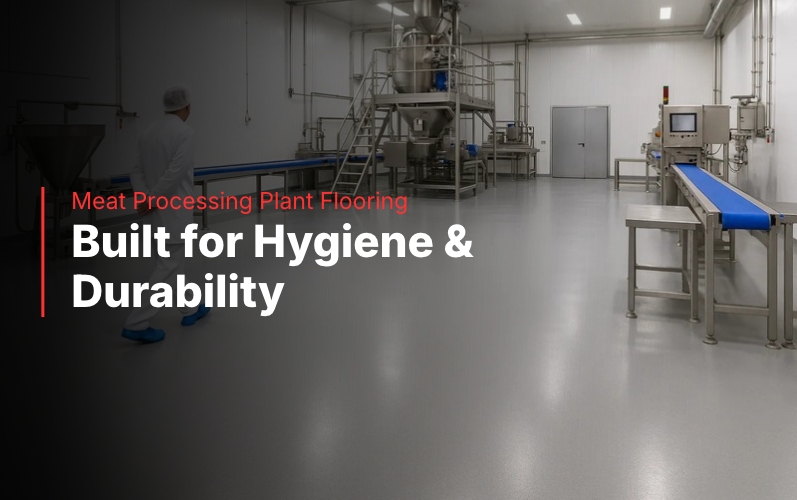
Meat Processing Plant Flooring in Ireland: A Complete Guide to Hygienic, Durable Systems
In a meat plant, the floor is not just a surface to walk on. It is part of your food safety system. Blood, fat, water, cleaning chemicals, and hot wash-downs hit a meat processing floor every day. In addition, many floors also get forklifts, trolleys, and heavy racking, adding constant stress on top. It is necessary to comply with the guide from the Food Safety Authority of Ireland and the applicable EU food hygiene regulations. That means resistance to slips, chemicals, bacterial growth, hot washdowns, and several other conditions is vital for butcher shops or processing factories.
This guide explains what the rules expect, what to look for in a system, and how to avoid the mistakes that lead to costly repairs and failed inspections.
Quick Answer:
Generally speaking, the suitable flooring system for Irish meat processing facilities is a seamless, non-slip textured urethane cement (polyurethane cement screed) floor screed, fitted with falls to hygienic drainage points. This system offers excellent washdown properties, chemical resistance, thermal shock resistance, and slip resistance. You should also look for water-resistant, easy-to-disinfect, and non-slip components.
Key Takeaways
- Choose seamless, non-porous flooring that is easy to clean, disinfect, and maintain.
- Make sure the floor can withstand blood, fats, cleaning chemicals, hot washdowns, and heavy traffic.
- Use slip-resistant finishes and proper drainage to reduce contamination and workplace accident risks.
- Follow Irish and EU food hygiene requirements, inspect floors regularly, and repair cracks or damaged areas before they become compliance issues.
What Are the Compliance Requirements for Butchers and Meat Processing Floors in Ireland?
EU food hygiene law: Premises requirements say floors must be kept in good repair and be easy to clean and, where needed, easy to disinfect. That means surfaces must be smooth, hard-wearing, waterproof and non-absorbent, and made from non-toxic material [unless alternatives are accepted by the competent authority*]. Floors must also allow proper surface drainage.
Rules for products of animal origin. Regulation (EC) No 853/2004 adds extra conditions for meat, including slaughter, cutting and processing areas. These rooms need surfaces that stand up to frequent washing and that do not trap contamination.
Official controls: Inspectors need to check the condition of floors, walls, drains and joints as part of routine visits. You have to be alert to damaged or worn flooring to avoid the risk of non-compliance.
HACCP: Your HACCP plan should ensure that all physical, chemical, and biological hazards are controlled. A floor that sheds fragments, holds standing water, or cannot be cleaned properly weakens that plan.
Retailer and Certification Standards: Standard certification schemes (BRCGS, IFS) and supermarket standards define requirements for floor quality and hygiene. Often, audit issues relating to floors are seen as posing a direct risk to product safety. They may impose additional requirements beyond legal obligations.
Worker safety: Under Irish workplace law, employers must manage slip and fall risks. A floor that is easy to clean but dangerously slippery is not a compliant floor.
*Always check the current text of each regulation and speak with your inspector or food safety consultant for advice on your own site.
What a Compliant Meat Plant Floor Must Do?
1. A Seamless, Non-Porous Surface
Choose a non-porous surface for your butcher shop flooring. Bacteria growth can happen in joints and cracks. A seamless, sealed surface gives micro-organisms fewer places to accumulate or settle. Plus, if you consider installing an extra layer, the microbial shield, this will prepare your flooring. Plus, you can sanitize and clean such floors faster.
2. Resistance to Heat and Thermal Shock
Hot water cleaning is standard in meat production facilities or butcher shops. On the other hand, meat processing floors also have freezer zones. So, normally, these areas move quickly between hot and cold conditions, such as near chillers and blast freezers. The floor must handle these swings without cracking or delaminating. Your flooring must be truly shock-resistant. textured, food-safe, non-tainting, odourless surface with verified wet and dry slip resistance.
3. Chemical and Organic Resistance
The weak surfaces will be affected by fats, blood, brine, lactic acid & harsh detergents. Make sure that the system selected is resistant to any of the chemicals in your process. Use food-safe, odourless finishes and incorporate coved edges where appropriate.
4. Safe slip resistance
Wet oily floors can cause problems. Choosing an anti slip flooring rightly is crucial here. The finish has to provide enough grip for your boots without being too coarse to cause dirt build-up and be difficult to clean. This will depend on the room you are using. A boning hall will have different requirements than a loading bay.
5. Drainage
Water and waste must be able to run into drainage. Floor tiles should have been laid to give the correct fall for your washing-down method. Drainage channels should be good and joints well sealed. Pools of water are a hygiene issue and can be a safety risk.
6. Durability
Meat processing floors are subject to heavy footfall, dropping tools, and sharp items. If the floor is chipped and worn, then water will get to the concrete below, causing damage.
Common Flooring Options Compared
| Flooring Type | Best Use in a Meat Plant | Main Strengths | Key Limitations |
|---|---|---|---|
| Cementitious Polyurethane / Urethane-Cement Screed | Lairage, slaughter, cutting, deboning, packing, washdown and CIP areas | Seamless; excellent resistance to blood, fats, water, chemicals, impact, abrasion and thermal shock; textured anti-slip finishes; suitable for coving | Higher installed cost; requires specialist preparation and skilled installation |
| Acrylicon MMA Resin Flooring | Refurbishments, butchers, processing rooms, packing areas and zones needing rapid return to service; selected wet production areas | Seamless quartz-filled trowel-applied system; very fast cure and rapid return to service; strong adhesion; hygienic coving; slip-resistant and cleanable finishes; good chemical resistance | Must be correctly specified for repeated hot washdown and steam exposure; not always the first choice for the most severe thermal-shock CIP areas compared with heavy urethane cement |
| Epoxy Resin Coating | Dry stores, packaging halls, maintenance areas, offices and low-moisture production zones | Hard, smooth, abrasion-resistant and cost-effective; easy to clean; available in many colours and thicknesses | Less suitable for repeated hot-water washdowns, steam and thermal cycling; can chip or delaminate under impact in heavy wet zones |
| Epoxy Resin Screed | Moderate-duty production, storage, packaging, workshops and some wet areas | Thicker and more durable than a coating; good mechanical strength; seamless finish possible | Generally less tolerant than urethane cement of thermal shock and aggressive repeated washdowns |
| Polyurethane Resin Coating | Light-to-medium-duty wet or dry areas, packaging, storage and light production traffic | More flexible than epoxy; good cleanability; better tolerance of movement and some thermal variation | Thin systems are not suitable for slaughter, CIP or high-impact areas |
| Polyurethane Resin Screed | Wet production areas with moderate-to-heavy duty requirements | Seamless, durable, chemical-resistant and more flexible than epoxy; good for textured anti-slip finishes | Cementitious urethane is usually preferred where extreme hot washdowns, steam and thermal shock dominate |
| Methyl Methacrylate (MMA) Resin Flooring | Areas needing very fast installation and return to service | Fast curing; seamless; strong adhesion; suitable for repairs and refurbishment | Product-dependent performance; may need careful selection for the most demanding wet processing zones |
| Quarry Tile / Ceramic Tile | Legacy installations and some dry support areas | Hard, heat-resistant and familiar; robust under point loads | Grout joints trap soil, fat and bacteria; tiles can crack, lift or become uneven under impact and thermal movement |
| Stainless-Steel Flooring / Drainage Panels | Small high-hygiene zones, drainage channels, kerbs and equipment plinths | Non-porous, washdown-friendly, highly cleanable and durable around drains | Expensive; can be noisy and slippery unless textured; impractical as a whole-plant floor |
| Bare or Sealed Concrete | External yards, plant rooms and non-food support areas only | Low initial cost and strong structural base | Porous, dusts, stains, absorbs liquids and is difficult to disinfect; rarely suitable in food-production areas without a seamless treatment |
Final Thoughts
A suitable flooring system for meat processing facility should be act as one of a protectors to your product and staff . It must ensure you’re compliant. It will also help with all your audits, reduce the risk of contamination, and reduce your long-term costs of repairs. With a focus on compliance right from the beginning and using a system that works with your rooms, youcan create a floor that will work hard for you for years to come.
Preparation and installation are critical to the long-term performance of the floor. Even the best material fails if the base is poor. Look for a reliable installation expert for your food processing facility. Mechanical preparation, such as shot blasting or grinding.
Choose Acrylicon Ireland for specialist flooring installation in food production facilities. We have been working as an installer in food production for years. Our team has extensive experience installing flooring systems in food production facilities. If you are planning a new build, a refurbishment, or a repair, speak to one of our specialists now!
Frequently Asked Questions
What does Irish and EU law say about floors in food premises?
EU hygiene law requires floors to be well maintained, easy to clean and disinfect, waterproof, non-absorbent, non-toxic and properly drained. Meat plants must also meet the extra rules for animal products and pass official inspections.
How long does it take to install a new floor in a meat plant?
It varies with the size of the area, the condition of the concrete, and the system used. Fast-curing systems can shorten shutdowns, and many plants schedule work over weekends or planned breaks. A site survey gives the most accurate timeline.
How do I stop my meat plant floor from being slippery?
Choose a surface with the right texture for each area and keep it clean, since fat and residue make any floor slick. Good drainage also helps. Choose a texture that provides sufficient grip without making cleaning difficult.
How often should a meat plant floor be inspected?
Check it as part of your regular hygiene routine, ideally with daily visual checks plus a more detailed review at set intervals. Record findings and repair small defects quickly, so they do not become audit failures.

Leave A Comment
Your email address will not be published. Required fields are marked *