
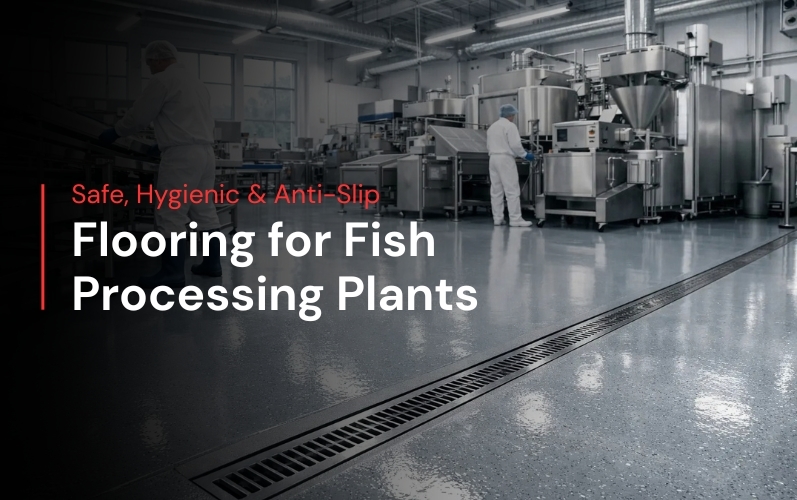
How to Choose Hygienic, Anti-Slip Flooring for Fish Processing Plants?
Seafood processing plants need to be compliant with industry-specific safety requirements. Fish processing involves the application of various chemicals. Some of them are acids and also kinds of oil-based products. So, there is a high risk that the flooring will become slippery or be damaged due to hazardous materials. It can affect the lifespan of the flooring. For these reasons, if you own a fish production or processing plant, you need a flooring solution that is waterproof. This should withstand constant contact with chemicals and have an anti-slip component.
As a reputable industrial flooring solution provider in Ireland, we have completed flooring installations in more than 1,000 properties across Ireland. In this blog, we will share some practical tips from our experience. This guide will give you the insights you need to choose the right flooring for your fish processing plant that can withstand moisture, chemicals, or any hazardous materials you have to use during production.
Key Takeaways
- Choose slip-resistant flooring: Select a suitable finish for wet, oily, and high-traffic areas.
- Check chemical and temperature resistance: Make sure the flooring can handle cleaning chemicals, hot washdowns, and cold storage conditions.
- Plan effective drainage: Ensure floors slope toward drains and prevent standing water.
- Prioritize hygiene and easy cleaning: Choose a seamless, non-absorbent surface with sealed joints and proper coving.
- Verify durability before installation: Ask your supplier for product specifications and test data on chemical resistance, slip resistance, and heavy-duty performance.
What Are The Essential Flooring Requirements for Fish Processing Plants?
| Requirement | What to Look For | Why It Matters |
|---|---|---|
| Hygiene | Seamless, dense, impermeable, and non-absorbent surface | Prevents water, blood, fish oils, and organic matter from entering pores or joints. |
| Slip Resistance | Textured aggregate or profiled finish suitable for wet and greasy conditions | Reduces slips during processing and washdown. |
| Cleanability | Surface that can be pressure-washed and sanitised without retaining residue | Supports daily sanitation and reduces microbial harbourage. |
| Chemical Resistance | Resistance to detergents, sanitisers, acids, salts, oils, and disinfectants | Prevents softening, blistering, and premature wear. |
| Thermal-Shock Resistance | Suitable for hot-water or steam cleaning and rapid temperature changes | Reduces cracking and delamination. |
| Drainage | Correct falls toward gullies, with no low points or puddles | Helps remove contaminated water and cleaning residues. |
| Mechanical Durability | Resistance to pallet trucks, forklifts, dropped tools, and impact | Extends service life in production and cold-storage areas. |
| Food-Processing Suitability | Product documentation, VOC information, and relevant third-party certifications | Helps support food-safety, audit, and regulatory requirements. |
What Flooring Challenges Do Fish Processing Plants Face?
There is a specific environment in a fish processing plant. They operate in demanding environments with frequent water exposure, cleaning, and heavy use. So, you need a floor that meets all requirements. Constant moisture on the floor and fish fats, blood, or oils can make the flooring dangerously slippery. Maintaining hygiene is non-negotiable in such plants. Most facilities undergo regular hot washdown with chemicals. Due to sanitization requirements, many companies use steam cleaning. This can cause thermal shock, as many plants also use huge freezers for storage. Such temperature changes make the flooring weak, which leads to delamination over time. Plus, the outdoor area of the facility often bears the weight of trucks or trolleys. The thin coating on some floors wears down.
How to Choose the Right Flooring Solutions for Your Fish Processing Plant?
Get the Anti-Slip Level Right
Choosing the anti-slip level is non-negotiable. A surface that is too coarse is hard to clean and traps waste. A surface that is too smooth is a slip hazard. You should aim for the right grip for each area.
Pendulum test (BS EN 13036-4) and Ramp test (DIN 51130) are two important methods for measuring slip resistance in most places.
Our waterproof resin flooring is ideal for commercial and industrial spaces where hygiene, durability, and easy cleaning matter. It supports a long lifespan of floors and protects floors from water penetration and damage. It also has anti-slip properties.
Read our blog on commercial flooring trends.
Don’t Forget the Drainage System
A hygienic drainage system is mandatory in any fish processing plant. Even the best floor will fail if water sits on it. Proper drainage is essential, as they manage moisture buildup when excess water or liquids during processing find a way out. So, the chance of contamination spreading becomes less. So check that:
- The floor has falls to drain (commonly around 1:60 to 1:80), so water runs away rather than pooling
- Drains are corrosion-resistant and easy to clean
- The resin is properly sealed into and around drain channels
- Stainless steel and PVC materials are really a good option.
- Standing water is a hygiene risk and a slip risk, and it shortens the life of the floor.
Check the Chemical and Temperature Resistance
Look for a chemical- and temperature-resistant floor. It’s a vital requirement for making the food processing environment safe for workers. Resin flooring can be a good option here. For example, MMA (methyl methacrylate) resin cures very quickly, even at low temperatures.
Other than this, Polyurethane (PU) concrete also handles temperature changes very well. It also withstands chemical use. However, you need to read the manufacturer’s guidance first to understand its actual usage.
Tiles made of porcelain, ceramic, or natural stone may suit some areas. However, check their slip resistance, chemical compatibility, and grout requirements.
If you are considering the flooring, you need to be a little patient with your supplier. Ask them about different tests the flooring has gone through. Ask them how it withstands mopping, hot washdown, and cold storage temperature changes. Always have a look for safety data sheets and manufacturer’s guidance.
Suitable for Heavy-Duty Use
Using heavy-duty flooring is also vital, as this flooring receives high traffic every day.
You can consider resin flooring designed to withstand heavy foot traffic and machinery, and daily wear in demanding environments.
Heavy-duty tiles also offer a durable, hard-wearing surface for industrial facilities.
We mostly recommend these for fish sales and production, warehouses, commercial kitchens, and manufacturing units. They can also be a suitable fit in fish or seafood processing plants or facilities.
Prevent Hygiene Problems
When choosing flooring for a fish processing plant, look for a system that prevents dirt buildup. Your facility deals with tons of fish residue; it poses a high risk of bacterial growth in water in the gaps or corners. Check that wall-to-floor joints are sealed, coving is installed, and drains allow water to flow away without leaving puddles. Our resin flooring comes with a special hygienic shield.
Final Thoughts
Selecting an appropriate floor for a fish-processing plant involves more than ensuring the floor is water-resistant. You have to take into account the slip-resistance factor, chemical exposure, temperature fluctuations, drainage, and cleaning requirements. The most suitable flooring will be determined by the environment within each particular zone of the facility.
Prior to deciding on any product, you should consult with the supplier regarding the processing methods you use, cleaning procedures, and loading. You should request testing data and specifications that will help you ensure compliance with your requirements. Properly installed flooring will ensure proper hygiene, workplace safety, and durability.
Get Expert Advice for Your Fish Processing Plant Flooring
Every fish processing plant has different flooring needs. Acrylicon Ireland provides industrial flooring solutions designed for demanding environments where hygiene, slip resistance, and durability matter. Contact our team today to discuss your plant’s requirements and find a flooring system suited to your processing areas, cleaning methods, and operating conditions.
Contact our team today to discuss your plant’s requirements and find a flooring system suited to your processing areas, cleaning methods, and operating conditions.

Leave A Comment
Your email address will not be published. Required fields are marked *